Description
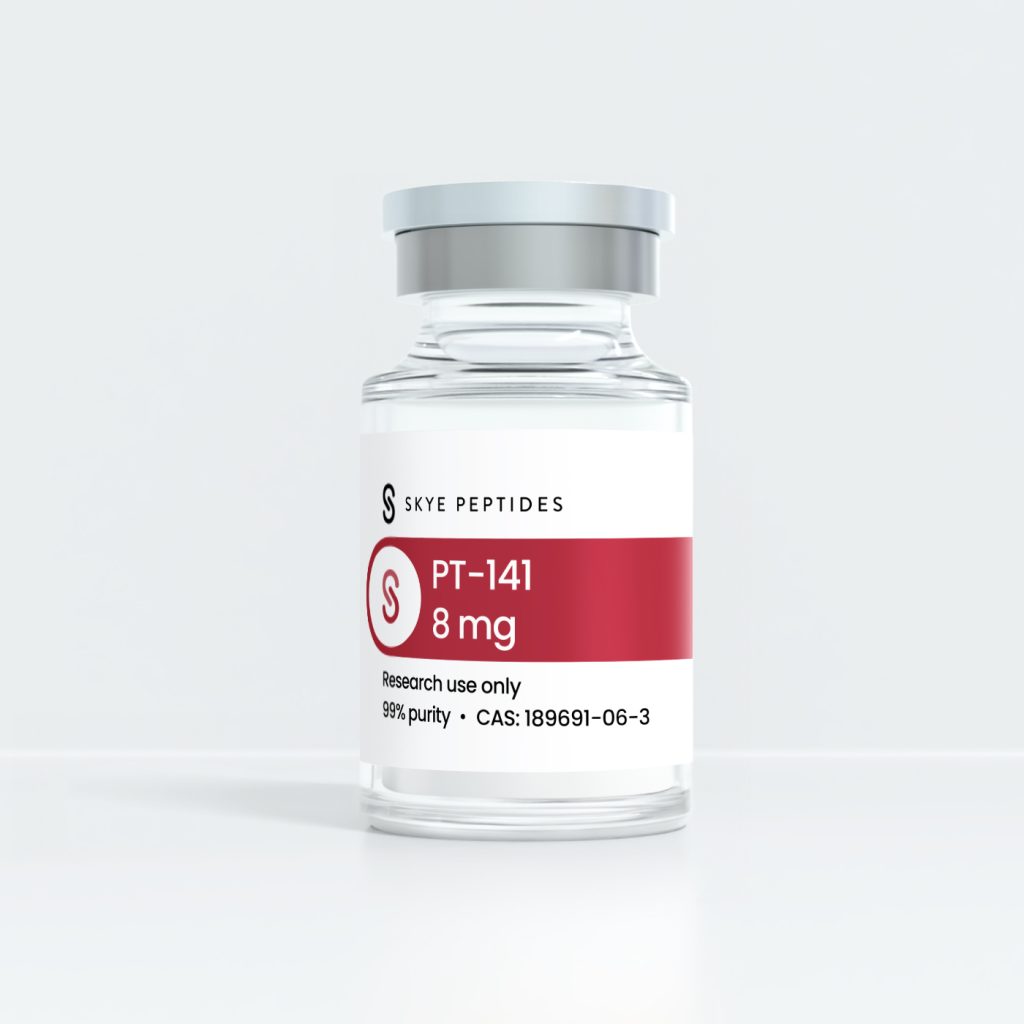
PT-141 – A simple and honest UK guide
In the UK research and clinical science community, PT-141 is best known as a peptide linked to sexual desire and arousal rather than hormone replacement or blood-flow medicines. It belongs to a group of compounds that act on the brain’s signalling system, not directly on the reproductive organs. This guide explains how it works, what studies show, how safe it appears to be, and how it is regulated in the United Kingdom.
What is PT-141?
This compound is also known by its international non-proprietary name bremelanotide. It is a synthetic peptide that acts on melanocortin receptors in the brain.
Unlike medicines such as sildenafil (Viagra), which work mainly by improving blood flow, this peptide acts centrally in the nervous system. In simple terms, it targets brain pathways linked to sexual motivation and arousal.
A scientific summary of the compound and its structure is available from PubChem:
https://pubchem.ncbi.nlm.nih.gov/compound/Bremelanotide (DoFollow)
It was originally developed from earlier research on melanocortin peptides and their effects on behaviour and neurological signalling.
How this melanocortin peptide works in the body
This peptide activates specific melanocortin receptors, especially MC3 and MC4 receptors, which are found in areas of the brain involved in motivation, mood and sexual response.
Its action focuses on:
-
sexual desire and arousal pathways
-
central nervous system signalling
-
emotional and motivational processing
Because it acts in the brain rather than in the blood vessels, its effects are considered fundamentally different from traditional erectile-dysfunction treatments.
An easy-to-read scientific explanation of the melanocortin system is available here:
https://www.ncbi.nlm.nih.gov/pmc/articles/PMC3311541/ (DoFollow)
Why brain-based treatment is important
Sexual dysfunction is not always caused by circulation problems. In many people, especially women, low desire and reduced arousal are more strongly linked to brain chemistry, stress, emotional health and neurotransmitter balance.
This is why research moved toward central-acting therapies that aim to influence desire and response rather than physical performance alone.
A clinical overview of sexual desire disorders can be found here:
https://www.ncbi.nlm.nih.gov/books/NBK519704/ (DoFollow)
Clinical research and approved medical use
Large clinical studies investigated this peptide mainly for the treatment of hypoactive sexual desire disorder (HSDD) in premenopausal women.
A key clinical trial published in The Journal of Sexual Medicine reported improvements in sexual desire and reduced distress related to low libido:
https://pubmed.ncbi.nlm.nih.gov/30865873/ (DoFollow)
As a result of these studies, the medicine bremelanotide received regulatory approval in the United States for the treatment of acquired, generalised hypoactive sexual desire disorder in certain women.
Official information from the U.S. Food and Drug Administration can be found here:
https://www.fda.gov/drugs/drug-approvals-and-databases/drug-trials-snapshots-vyleesi (DoFollow)
Potential benefits discussed in research settings
In scientific and clinical discussions, the main areas of interest include:
-
improved sexual desire
-
improved arousal response
-
reduced psychological distress related to low libido
-
central activation of sexual motivation pathways
Researchers highlight that the effect is not mechanical. Instead, the compound influences how the brain responds to sexual stimuli.
Female sexual interest and arousal disorder
The strongest clinical evidence relates to women with hypoactive sexual desire disorder. This condition is defined by persistent lack of sexual desire that causes personal distress.
The NHS explains that reduced libido can be influenced by emotional, psychological and biological factors:
https://www.nhs.uk/conditions/loss-of-libido/ (DoFollow)
This supports the idea that brain-acting therapies may be more suitable for some people than purely physical treatments.
Research interest in male sexual function
Although most clinical development focused on women, some early studies explored the effect of melanocortin peptides on male sexual behaviour.
Researchers observed:
-
central activation of arousal pathways
-
possible influence on sexual motivation
However, large-scale regulatory approval for male treatment has not been established for this compound.
An overview of sexual function regulation in the brain is available here:
https://www.ncbi.nlm.nih.gov/pmc/articles/PMC6527118/ (DoFollow)
Safety profile and common side effects
Clinical studies reported several common side effects. These include:
-
nausea
-
flushing
-
headache
-
temporary increase in blood pressure
-
skin darkening in some users with repeated exposure
Most effects were described as mild to moderate in intensity.
A detailed medicine safety summary for bremelanotide is available from MedlinePlus:
https://medlineplus.gov/druginfo/meds/a619036.html (DoFollow)
This information is provided for educational purposes only and does not replace medical advice.
Important safety considerations for PT-141
People should seek medical advice before any use or research involving this peptide if they have:
-
cardiovascular disease
-
uncontrolled high blood pressure
-
severe liver or kidney disease
-
a history of fainting or blood-pressure instability
This is especially important because of its temporary effect on blood pressure and heart rate.
UK regulatory position
In the United Kingdom, bremelanotide is not currently licensed as a prescription medicine through the NHS.
All medicinal products must be authorised by the Medicines and Healthcare products Regulatory Agency before they can be legally marketed for treatment.
Official UK regulatory information is available here:
https://www.gov.uk/government/organisations/medicines-and-healthcare-products-regulatory-agency (DoFollow)
This means that, in the UK, the compound is normally discussed only within clinical research, private medical evaluation, or scientific contexts.
Ethical and responsible use in the UK
Sexual health treatments require careful psychological and medical assessment. Low sexual desire may be linked to:
-
mental health conditions
-
relationship difficulties
-
hormonal changes
-
medication side effects
The NHS recommends that people experiencing persistent sexual difficulties speak with a qualified healthcare professional rather than self-treating:
https://www.nhs.uk/live-well/sexual-health/ (DoFollow)
Final thoughts for UK readers
This melanocortin-based therapy represents a different approach to sexual health research by focusing on the brain rather than blood flow or hormone replacement. Clinical studies show promising results in specific patient groups, particularly women with distressing low sexual desire.
If you are researching PT-141, it is important to rely on high-quality medical sources, follow UK regulatory guidance, and always prioritise professional healthcare support. This ensures that discussions about sexual health remain safe, ethical and scientifically responsible.