Description
NAD+ (Buffered) – UK Guide to Benefits, Research & Use
NAD+ (buffered) has gained attention in recent years as a molecule involved in energy metabolism, cellular repair, and healthy ageing. This page explains what NAD+ (buffered) is, how it works, potential benefits, and considerations for people in the UK. The content is written in simple English for education and informational purposes and does not replace professional medical advice.
H2 – What is NAD+ (buffered)?
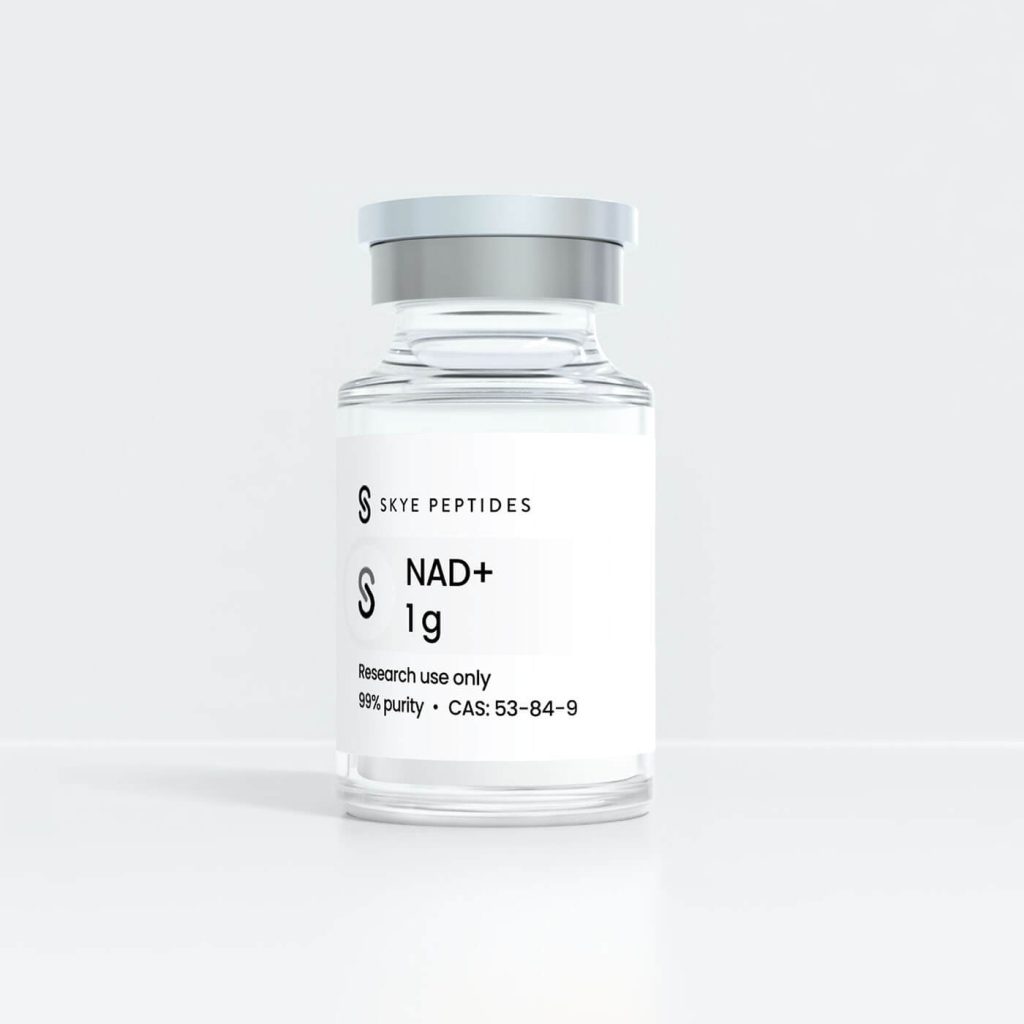
NAD+ (buffered) is a modified form of nicotinamide adenine dinucleotide (NAD+), an essential coenzyme found in every cell of the body. NAD+ plays a critical role in energy production, helping cells convert nutrients into ATP—the main energy currency of the body.
The term “buffered” refers to the addition of stabilising compounds that reduce acidity and improve absorption when administered intravenously or orally in clinical settings. Buffered NAD+ may be easier on the body and provide more consistent results than non-buffered formulations.
For scientific background on NAD+ and its metabolic role, see the National Institutes of Health (NIH) resources:
https://www.ncbi.nlm.nih.gov/books/NBK279396/
H3 – How does NAD+ (buffered) work in the body?
NAD+ (buffered) supports several fundamental cellular processes, including:
-
Energy metabolism: It helps enzymes convert carbohydrates, fats, and proteins into energy.
-
DNA repair: NAD+ activates enzymes like PARPs that repair damaged DNA, supporting cellular longevity.
-
Cell signalling: NAD+ influences sirtuins, proteins that regulate ageing, inflammation, and metabolism.
By maintaining optimal NAD+ levels, research suggests that buffered formulations may enhance absorption and reduce potential side effects, making it more suitable for clinical and wellness settings.
For a detailed biochemical review of NAD+, refer to PubMed:
https://pubmed.ncbi.nlm.nih.gov/32829000/
H2 – Potential benefits of NAD+ (buffered)
While research is ongoing, preliminary studies and clinical observations indicate several potential benefits:
-
Support for healthy ageing – NAD+ is linked to longevity pathways in cells, especially via sirtuin activation.
-
Increased cellular energy – By improving mitochondrial function, NAD+ may support energy levels and stamina.
-
Neuroprotection – Some studies suggest NAD+ may help maintain cognitive health by supporting neuronal energy metabolism.
-
Metabolic support – NAD+ may help regulate glucose and lipid metabolism in cells.
-
Recovery from oxidative stress – NAD+ helps repair damage from free radicals, potentially reducing cellular stress over time.
It’s important to note that while studies are promising, most human research is still in early phases, and NAD+ therapies are primarily offered through regulated clinics in the UK.
H3 – How NAD+ (buffered) is administered
In clinical and wellness settings, NAD+ (buffered) is typically delivered through:
-
Intravenous (IV) infusion: Provides direct and rapid absorption, bypassing the digestive system.
-
Oral or sublingual forms: Buffered formulations improve stability and reduce stomach irritation.
The dosage, infusion time, and frequency are determined by clinicians based on patient goals, medical history, and current health status. Self-administered protocols without supervision are not recommended due to potential side effects like flushing, nausea, or fatigue.
For guidelines on IV nutrient therapies in clinical settings, refer to:
https://www.ncbi.nlm.nih.gov/pmc/articles/PMC4892277/
H4 – Safety considerations for NAD+ (buffered)
Although generally well tolerated under professional supervision, NAD+ (buffered) has some safety considerations:
-
Potential side effects: Headache, nausea, fatigue, mild flushing, or dizziness during infusion.
-
Interactions: May interact with certain medications, supplements, or medical conditions.
-
Professional oversight: Administration should be done by qualified clinicians in regulated settings, such as CQC-registered clinics in the UK.
The Care Quality Commission provides guidance on regulated private healthcare services in the UK:
https://www.cqc.org.uk
H2 – NAD+ (buffered) and scientific research
Several studies highlight the role of NAD+ in energy metabolism, ageing, and DNA repair:
-
A 2020 review indicated that NAD+ boosters may improve mitochondrial function and cellular energy:
https://pubmed.ncbi.nlm.nih.gov/32715320/ -
Research also shows that maintaining NAD+ levels could support healthy ageing and metabolic health.
-
Buffered forms are particularly studied for improved bioavailability and tolerability compared to unbuffered formulations.
While these findings are promising, larger clinical trials are needed to fully confirm the benefits and optimal dosing strategies for humans.
H3 – Choosing a responsible UK provider for NAD+ (buffered)
If you are considering NAD+ (buffered) therapy in the UK, it is important to choose a provider that:
-
Is CQC-registered and follows UK clinical governance standards.
-
Uses qualified medical professionals to assess suitability.
-
Offers transparent information about dosage, infusion times, and potential risks.
-
Provides follow-up and monitoring support to track outcomes.
Avoid unverified sources or online suppliers that promote unsupervised NAD+ products, as these may pose health risks.
H4 – Integrating NAD+ (buffered) into a wellness plan
In regulated UK settings, NAD+ (buffered) can be integrated with:
-
Nutrition and lifestyle programs
-
Exercise and physical rehabilitation
-
Anti-ageing and metabolic health protocols
Because NAD+ is a coenzyme involved in fundamental cellular processes, supporting it with lifestyle strategies may enhance overall wellness outcomes.
Conclusion
NAD+ (buffered) represents a promising area of research for energy metabolism, cellular repair, and wellness. While studies are still developing, buffered formulations are designed to improve tolerability and absorption.
In the UK, safe and effective use depends on professional clinical supervision, regulatory compliance, and evidence-based protocols. Patients should always consult qualified healthcare providers and avoid unsupervised self-administration.
For further reading on NAD+ and cellular metabolism, see:
https://www.ncbi.nlm.nih.gov/books/NBK279396/